Notalo › How to read sheet music
How to read sheet music
Sheet music is a map of what to play: how high each note is (its position on the staff) and how long it lasts (its shape). This guide covers both, for piano, with every example labeled so you can check yourself.
- The staff and the two clefs
- Note names on the treble clef
- Note names on the bass clef
- Note values: how long each note lasts
- Sharps, flats and key signatures
- A first piece, and how to practice
1. The staff and the two clefs
Music is written on a staff: five horizontal lines with four spaces between them. Each line and each space is one note. Higher on the staff means a higher pitch; lower means lower.
The symbol at the left edge is the clef. It tells you which note each line stands for. Piano music uses two staves joined by a bracket: the top one has a treble clef (𝄞) and is usually played by the right hand; the bottom one has a bass clef (𝄢) for the left hand. Same lines, different note names — that is the one thing that trips most beginners, so the next two sections take the clefs one at a time.
2. Note names on the treble clef
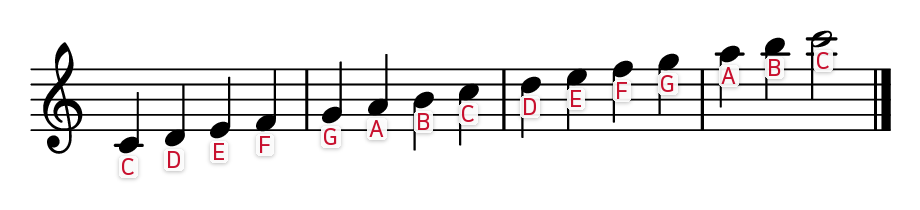
The seven letters C D E F G A B repeat as you go up. On the treble clef:
- Lines, bottom to top: E G B D F — "Every Good Boy Does Fine".
- Spaces, bottom to top: F A C E — it spells "face".
- Middle C hangs just below the staff on its own little line. Notes can keep going above and below the staff on these ledger lines.
You do not have to memorize all fifteen notes in the picture. Learn two anchors — the bottom line is E, the top line is F — and count steps from there. Each step (line to space, or space to line) is the next letter. Full treble clef chart →
3. Note names on the bass clef
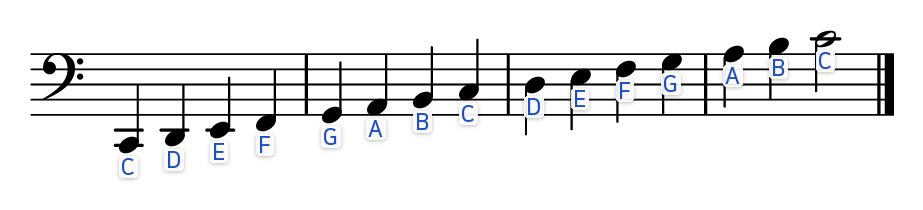
- Lines, bottom to top: G B D F A — "Good Boys Do Fine Always".
- Spaces, bottom to top: A C E G — "All Cows Eat Grass".
- Middle C is the same key on the piano in both clefs; it just gets drawn below the treble staff and above the bass staff.
A shortcut that works: a note on the bass clef is two letters lower than the same position on the treble clef (treble top line F → bass top line A). Full bass clef chart →
Skip the memorizing for now. Upload a photo or PDF of any piano sheet music and Notalo writes the letter under every note, so you can play it today and learn the staff as you go.
Add letters to my sheet music4. Note values: how long each note lasts

| Looks like | Name | Length in 4/4 |
|---|---|---|
| Hollow head, no stem | Whole note | 4 beats — the whole bar |
| Hollow head with a stem | Half note | 2 beats |
| Filled head with a stem | Quarter note | 1 beat |
| Filled head, one flag or one beam | Eighth note | ½ beat |
| Filled head, two flags or two beams | Sixteenth note | ¼ beat |
| Any note with a dot after it | Dotted note | 1½ × its normal length |
The two numbers at the start (the time signature, like 4/4 or 3/4) say how many beats fit in each bar and which note gets one beat. Vertical bar lines divide the music into bars. Counting out loud — "1 2 3 4" — while you clap the rhythm is the fastest way to make note values automatic.
5. Sharps, flats and key signatures

- A sharp (♯) raises a note by one key on the piano; a flat (♭) lowers it; a natural (♮) cancels either.
- Sharps or flats written right after the clef are the key signature. They apply to that letter in every octave, all the way through the piece — the most common mistake is forgetting them a few bars in.
- A sharp or flat written next to a single note is an accidental. It lasts until the end of that bar.
6. A first piece, and how to practice
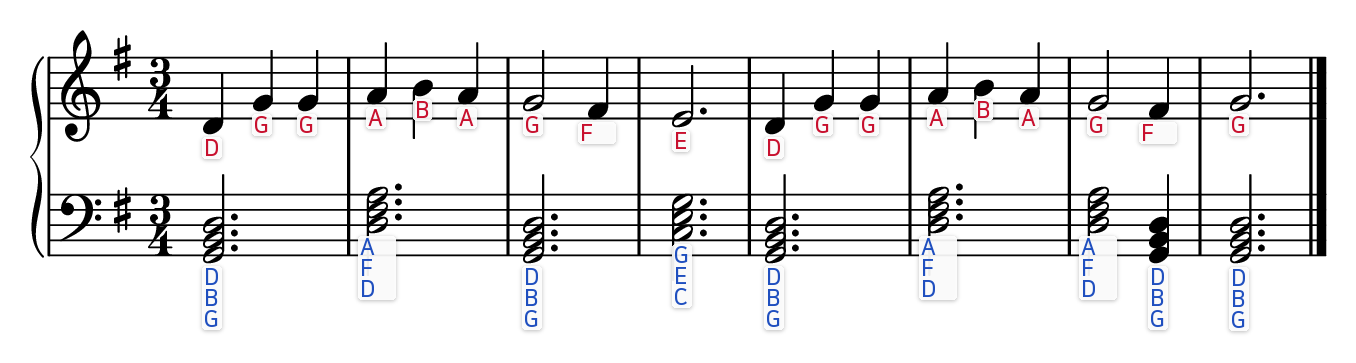
Try reading this one. Notice the one sharp after the clef: every F is F♯. The left hand plays three notes at once — a chord — and you read a chord from the bottom up.
How to practice reading:
- Say the letters first, without playing. Point at each note and name it. Cover the labels with your hand once you can.
- Clap the rhythm while counting the beats out loud.
- Play hands separately, slowly. Speed comes last.
- Read new music every day, even four bars. Reading is a skill you get from volume, not from one long session.
Where do you get music to read at your level? Anything you already own works — and if the page has no letters yet, Notalo adds them: upload a photo or PDF and you get the same sheet music back with the letter under every note, colored by hand, plus a MIDI file to hear it.
Practice with your own sheet music. Upload a photo or PDF of any piano sheet music and Notalo writes the letter under every note, so you can play it today and learn the staff as you go.
Add letters to my sheet musicFrequently asked questions
How long does it take to learn to read sheet music?
Most beginners can name any note on the treble staff within a week of ten-minute daily practice, and read simple pieces in both clefs within a month. Reading fluently at speed takes longer and comes from playing, not memorizing.
Do I need to learn both clefs?
For piano, yes: the right hand reads treble, the left hand reads bass. Singers, flute and violin players mostly need treble; cello, bass and trombone mostly need bass.
What is the fastest way to read sheet music?
Learn the five treble lines (E G B D F) and four spaces (F A C E), then count steps up or down from a note you know. While you learn, practice from sheet music that already has the letters written under each note so you are playing real music from day one.